Why Some Injuries Just Won't Quit (And What We’re Doing About It)
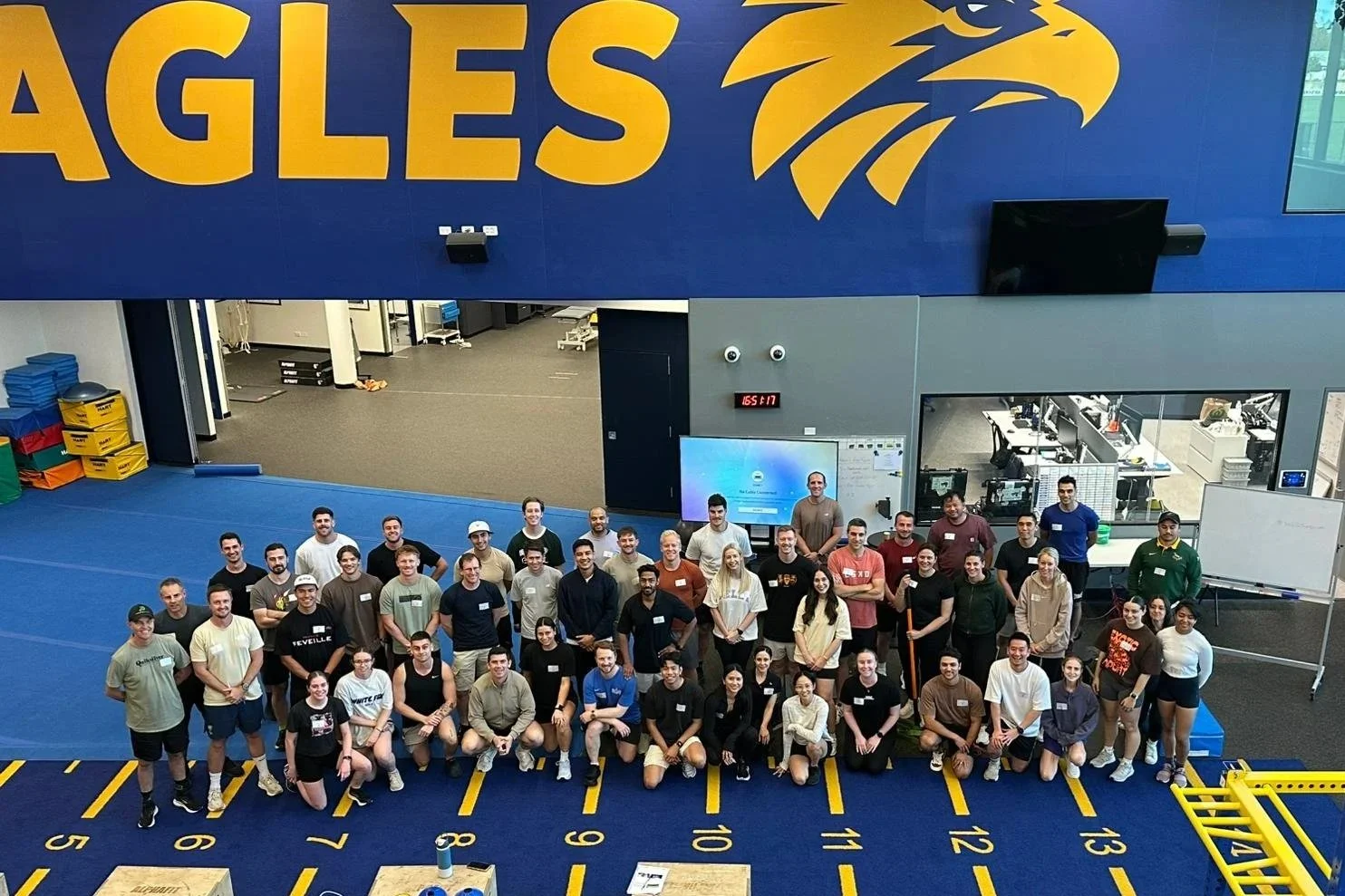
Late last year, I had the privilege of flying over to Perth to spend some time learning from one of the best in the business—Enda King. If you aren’t familiar with the name, Enda is the Head of Elite Performance at Aspetar in Qatar, where he works with some of the world’s most elite athletes on the most complex sports injuries.
I went because I wanted to dig deeper into a problem that frustrates every athlete and every physio: those pesky, recurring injuries. You know the ones. You do the rehab, you feel "strong enough," and you get through a game or two—only to have that same hamstring ping again. Or maybe it’s a new injury every season. It’s a frustrating cycle, and honestly, as a physio, it’s something I’ve spent my career trying to "crack the code" on.
Symptoms vs. Problems
A good physio can find where it hurts (the source of the symptoms). But to stop an injury from coming back, we have to find why it happened in the first place (the source of the problem).
The "devil is in the details" here. It’s about looking at the big picture of how you move—not just in the clinic, but how you cut, jump, and sprint on the field. By spotting those tiny biomechanical faults, we can stop overloading the tissues that are struggling.
The "Ghost" of Old Injuries
One of the big lightbulb moments from the event was the idea of Injury Legacy.
Think of it like the "mess" an injury leaves behind long after the pain has gone. For example, if you sprain your ankle, your body is incredibly smart—it starts finding "workarounds" so you can keep moving. But even after the ankle feels fine, your brain might keep those protective habits turned on.
It might "turn down the volume" on certain muscles in your hip or knee without you even realizing it. If we don’t address that "legacy," you’re essentially running on a misaligned engine. Eventually, something else is going to break down.
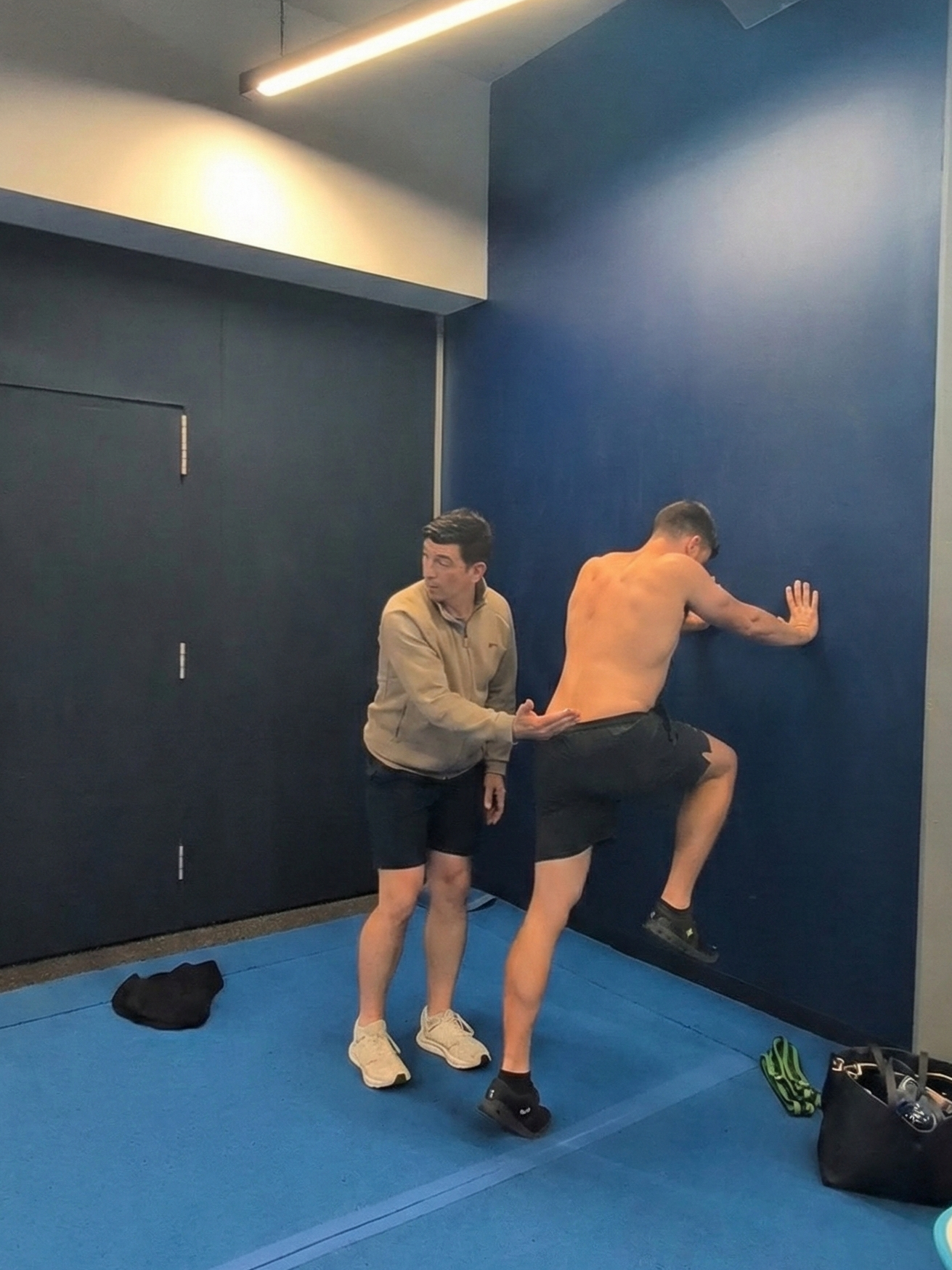
Enda King highlighting the ideal hip lock position and key faults to look for.
Measuring What Matters
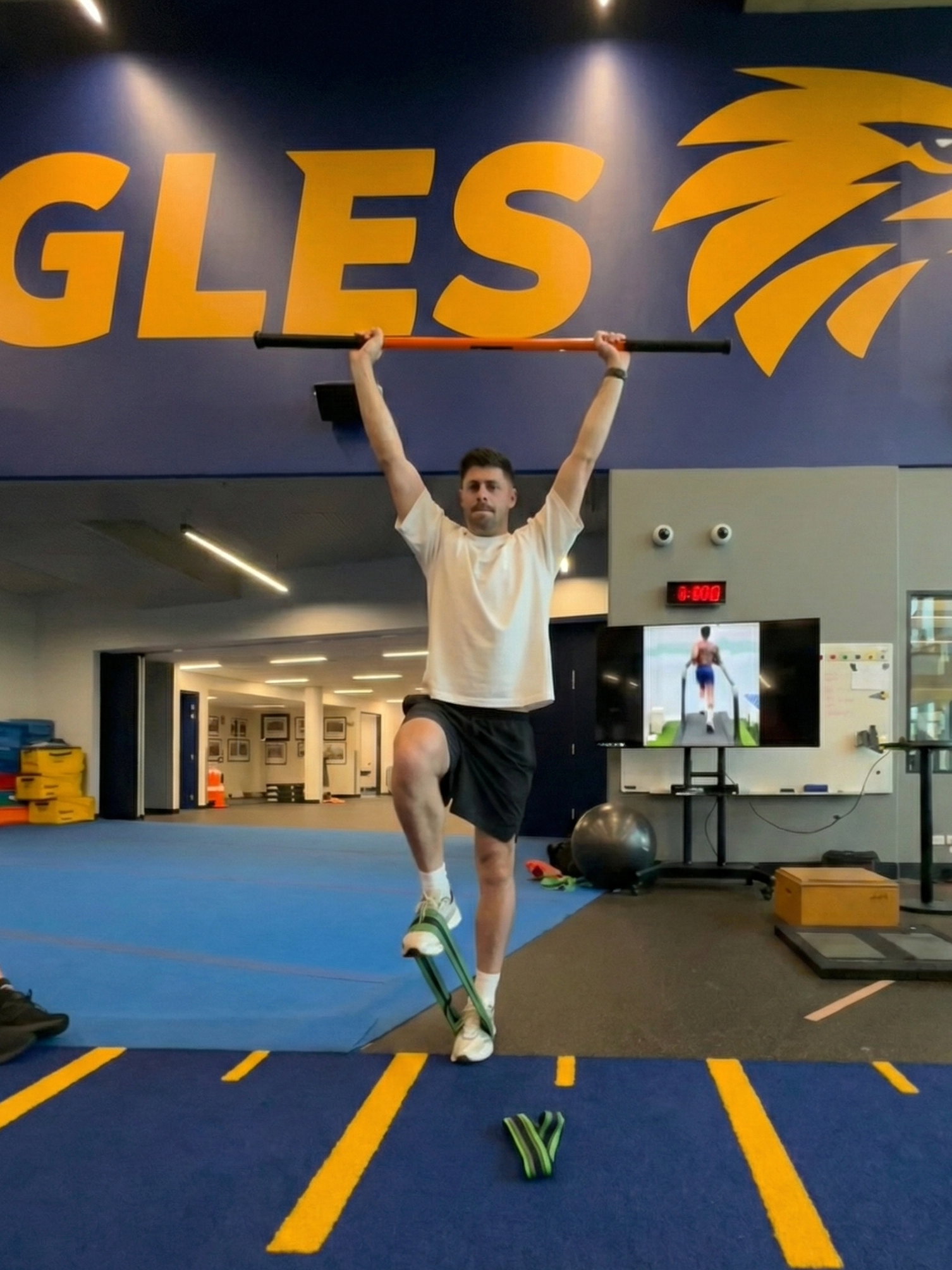
At Aspetar, they don’t guess; they measure. And I’m proud to say we’ve brought that same "pro-level" approach here to Macarthur Physiotherapy. We use high-tech equipment to look at what we call the Three Pillars:
Your Power: Are you actually explosive, or are you compensating?
Your Strength: Is your injured side truly back to 100% compared to your healthy side?
Your Movement: How do your joints handle a sudden change of direction?
When we have this data, the guesswork disappears. We can tell you exactly where you stand and when you are actually ready to return to sport safely.
Let’s Get You Ready for 2026
Whether you’re dealing with a recurring calf strain or you’re working your way back from an ACL reconstruction, our goal is to give you the same elite-level care the pros get, right here in Campbelltown.
If you’re tired of the "revolving door" of injuries, come chat with me or one of the team. Let’s look at your "injury legacy" together and make sure you’re staying healthy for the 2026 season and beyond.
Ready to see what's holding you back? Book a Comprehensive Assessment at Macarthur Physiotherapy today.